Fit the roll, reduce the bulk.
Earlier: The bag compartment was too small in some prototypes and larger than needed in others.
My direction: Refine the space around a commonly available bag roll, keeping the carry size as compact as possible.
A twist-operated iris and integrated bag supply rethink pet-waste pickup for city walks.
INDEPENDENT CONCEPT & DEVELOPMENT RHINO CAD · 3D-PRINTED PROTOTYPING · FIT REFINEMENT
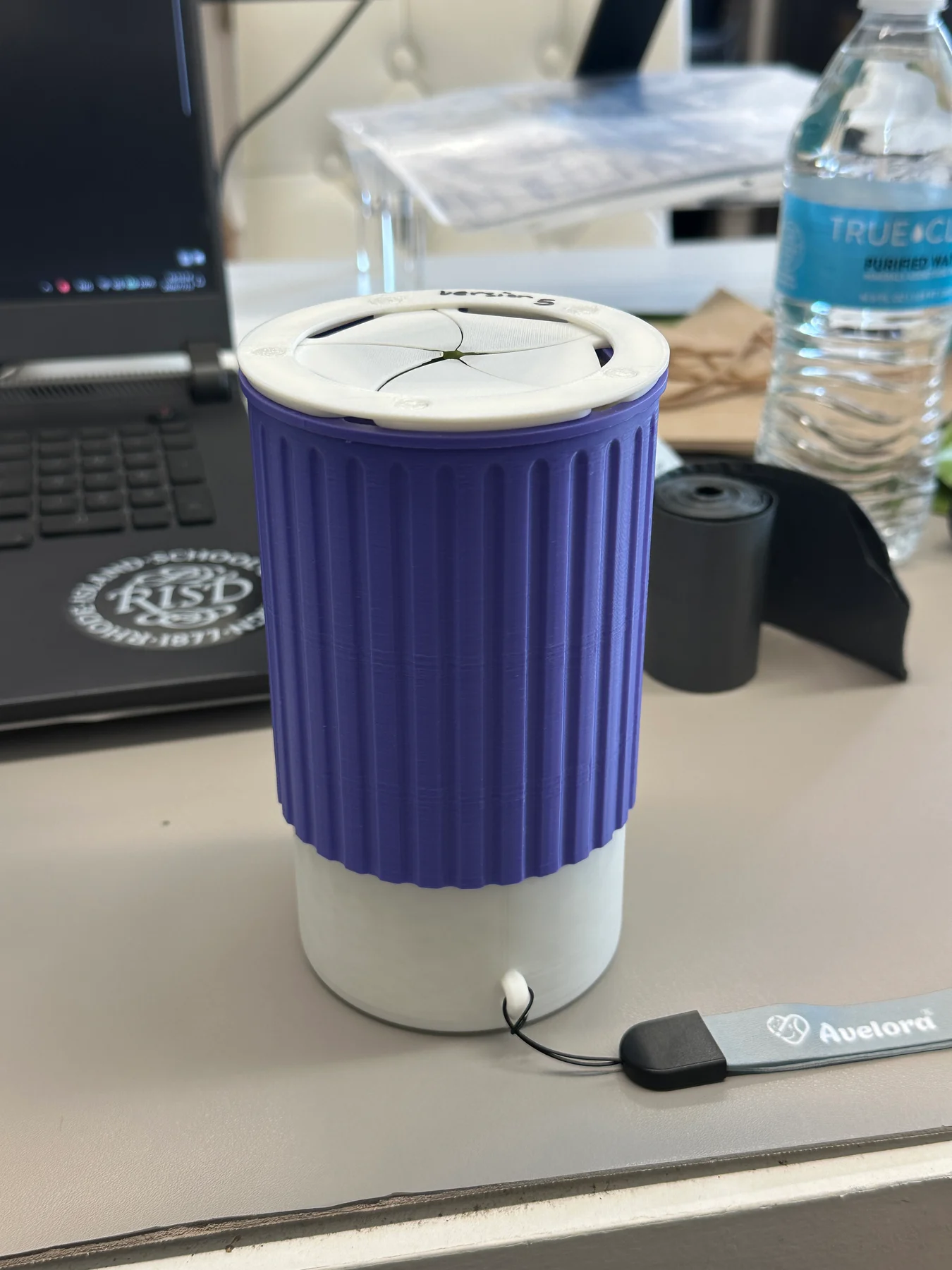
What if you could place a tool over the waste, then twist?
A plastic bag separates the hand from dog waste, but not from the sensation of its warmth and shape. I wanted a compact alternative to the bulky scoops and tongs I had encountered—an object designed to belong on a city walk.
During my summer 2026 internship in New York, I independently developed the concept, mechanical interaction, form, Rhino models, and printed prototypes. The result is a working exploratory prototype with a manual iris and integrated bag supply.
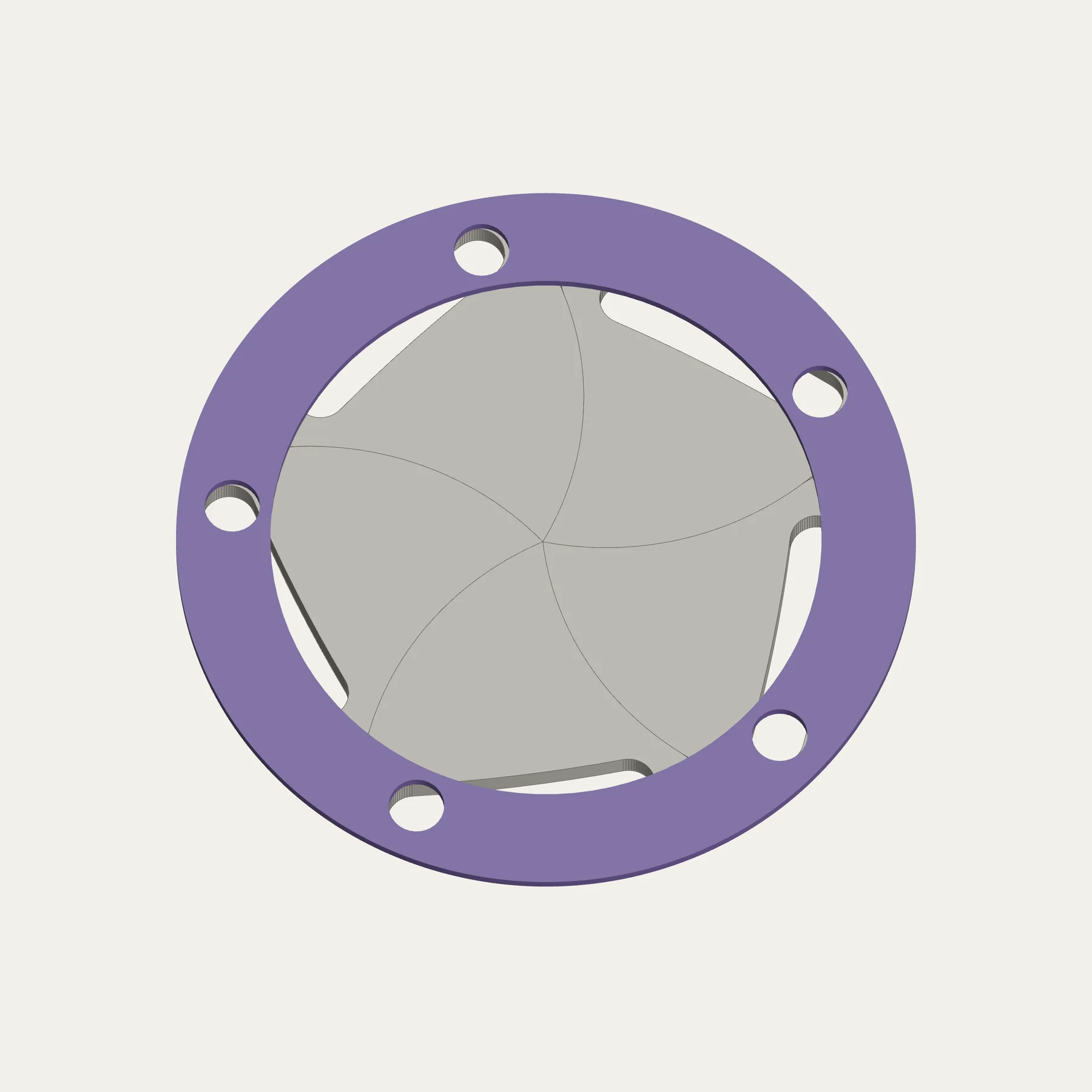
WATCH THE PROTOTYPE Explore the design decisionsOne rotary action drives the overlapping blades.
The camera-aperture-inspired opening makes the mechanism visible. Grip ribs give the fingers purchase and carry the same repeated geometry around the body.
I chose manual operation to avoid adding a motor, battery, and their associated weight and cost. The aim was a simpler tool designed around everyday carrying.
Each print raised another question about using it.
I was designing for an object that could be carried at the waist or in a pocket. That goal shaped the space for the bags, the opening action, and the connection between parts.
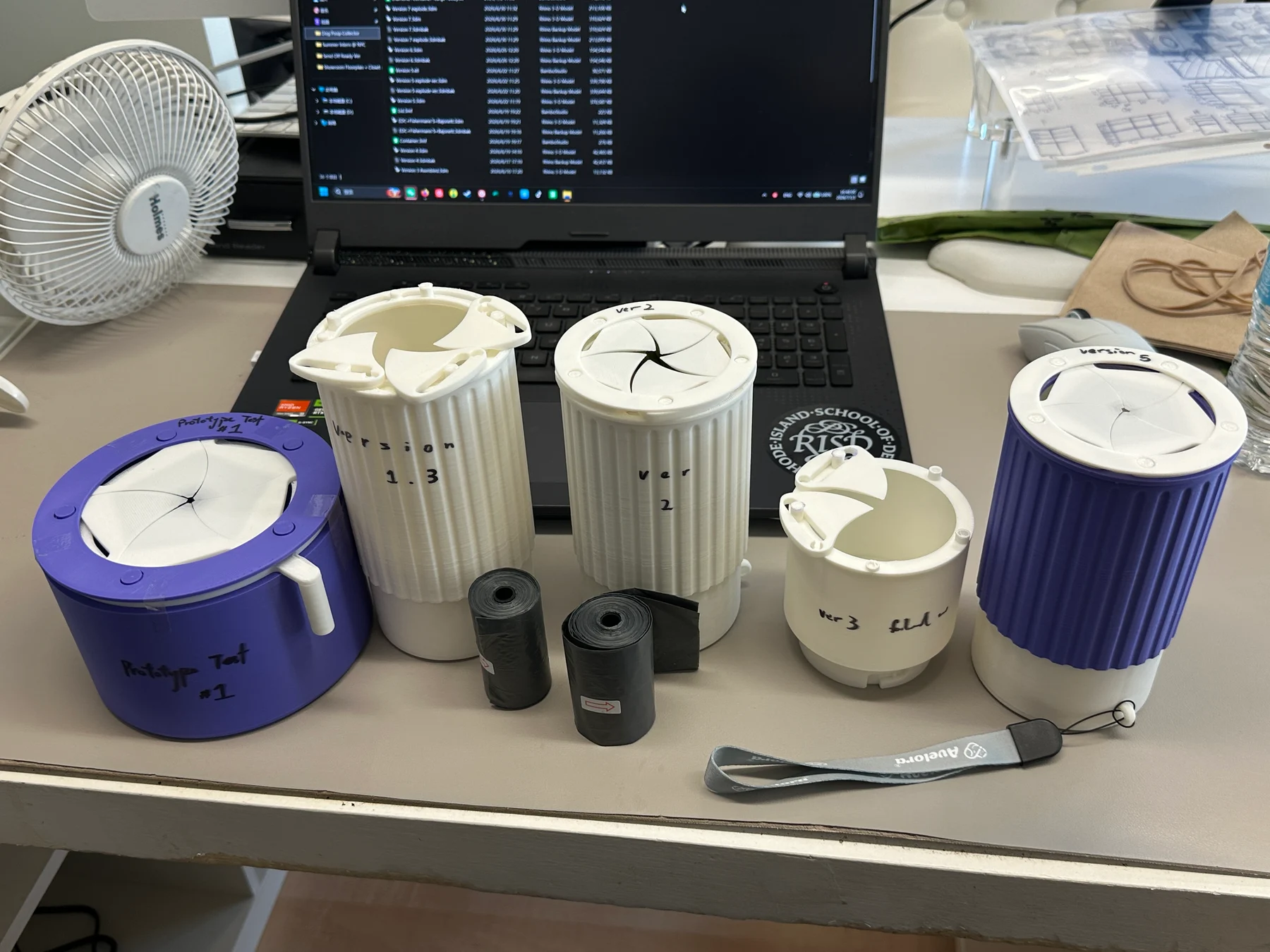
I used the prototypes repeatedly and passed them to colleagues for informal handling feedback. Their comments on the fit helped guide further adjustments.
Earlier: The bag compartment was too small in some prototypes and larger than needed in others.
My direction: Refine the space around a commonly available bag roll, keeping the carry size as compact as possible.
Earlier: A separate operating lever had to be turned to open and close the iris.
My change: Move to turning the outer grip directly. I wanted the action to read as “place it over, then twist.”
Earlier: The connection could feel too loose or too tight; an earlier connecting structure also wore down with repeated operation.
My change: Revise the connection structure, then refine its mating features through printing and handling.
Retrospective account of prototype development. The selected prints below document the work; individual problem states were not photographed.
The connection should stay attached while the product is carried, but still be easy to open for refilling. Too little resistance risks accidental release; too much makes opening difficult and risks damage if forced.
I used the assembly myself, then let colleagues try it and tell me whether the connection felt too loose or too tight.
INPUT · MY USE + COLLEAGUES’ FEEDBACKRevise the depth of the recesses and how far the matching protrusions extend, then print the revised parts.
VARIABLES · RECESS + PROTRUSIONReassemble and try again, checking the feel against those two goals: staying attached during carrying and opening without excessive effort.
CHECK · INFORMAL HANDLING FEEDBACK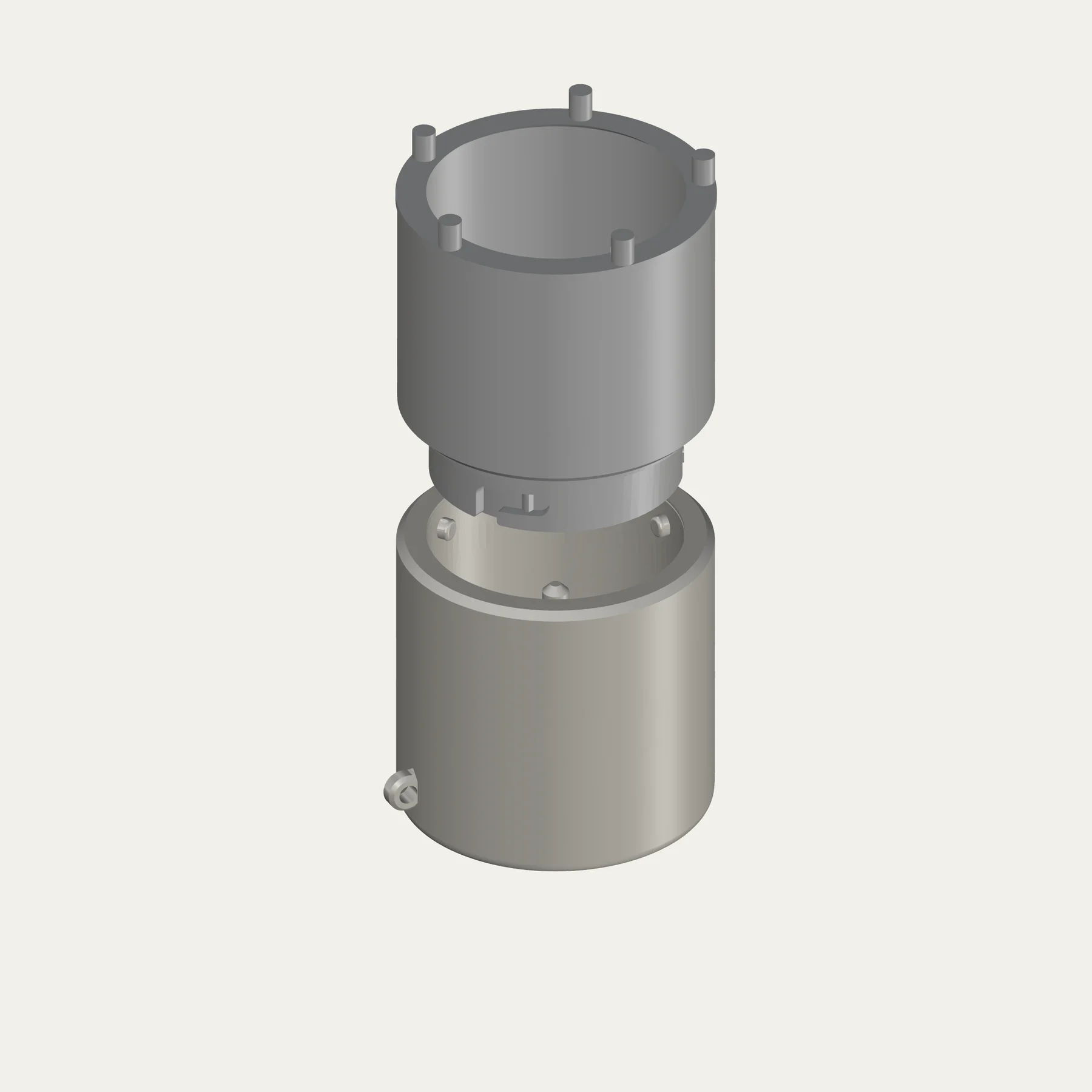
Small features. A difference felt by hand.
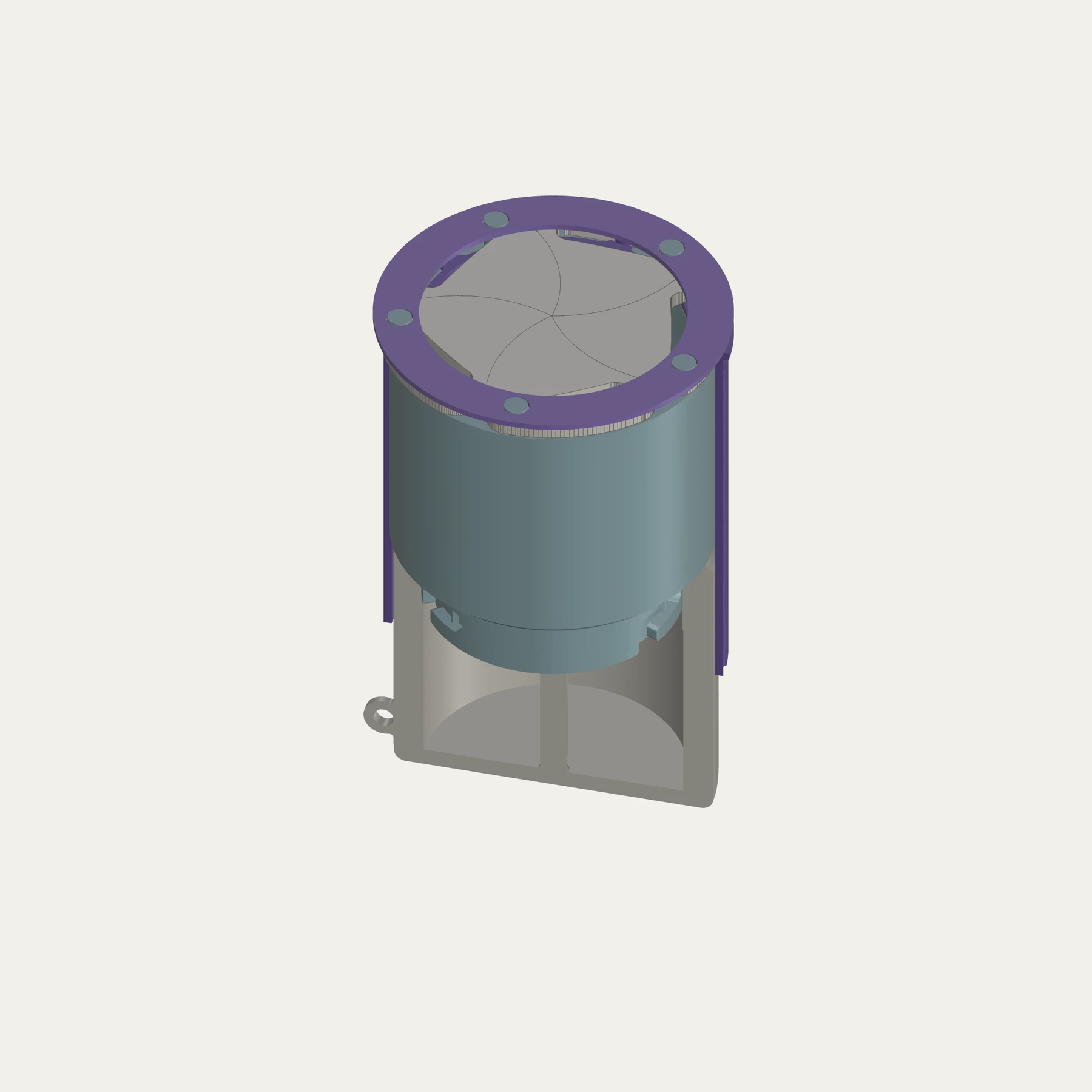
I adjusted these features together and judged the result in the assembled print. This drawing identifies the features in the current design.
The connection is part of the user experience. A CAD assembly alone could not tell me how the printed parts would feel to take apart and put back together.
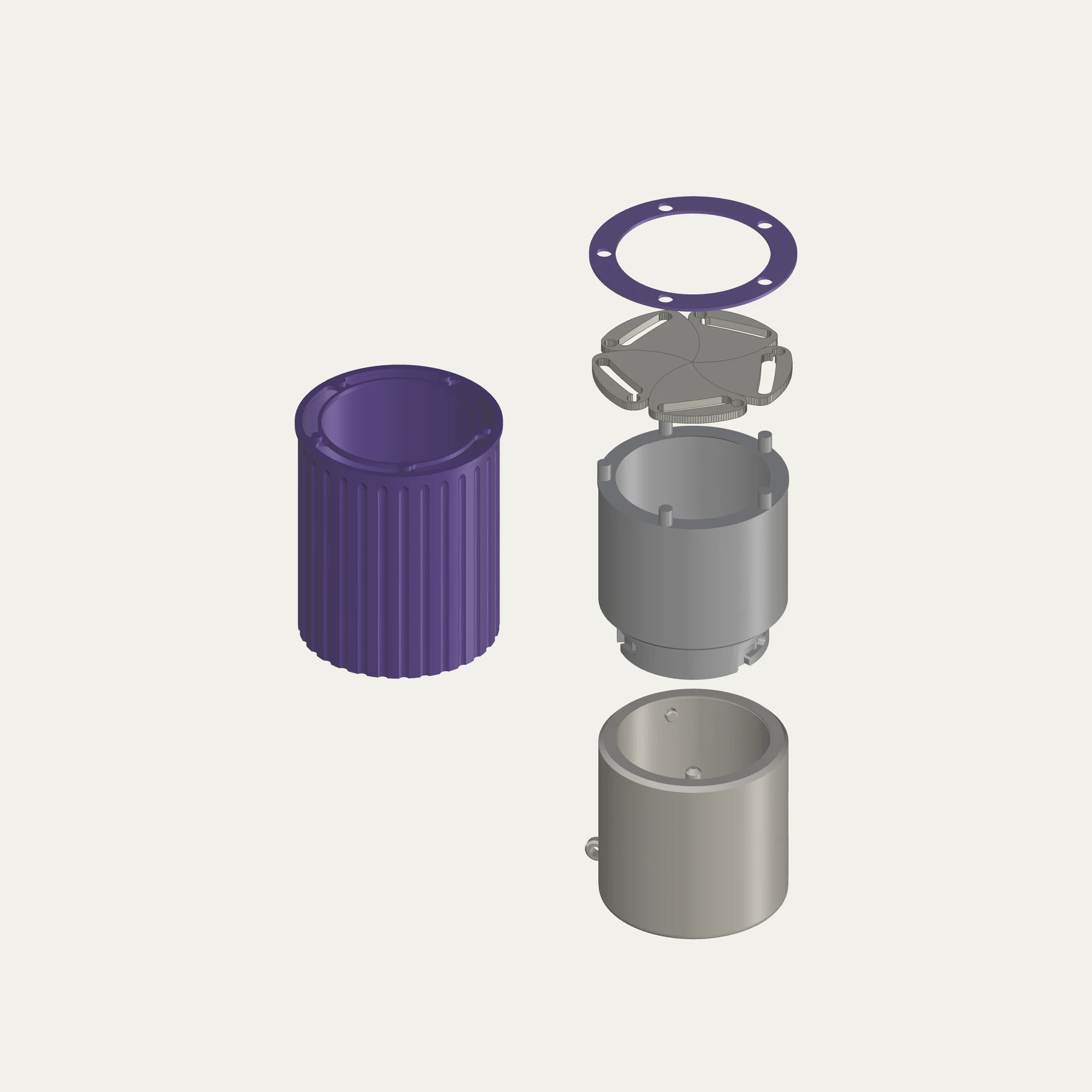
The mechanism shapes the object.
HOVER / TAP A PART TO HIGHLIGHT IT IN THE CAD
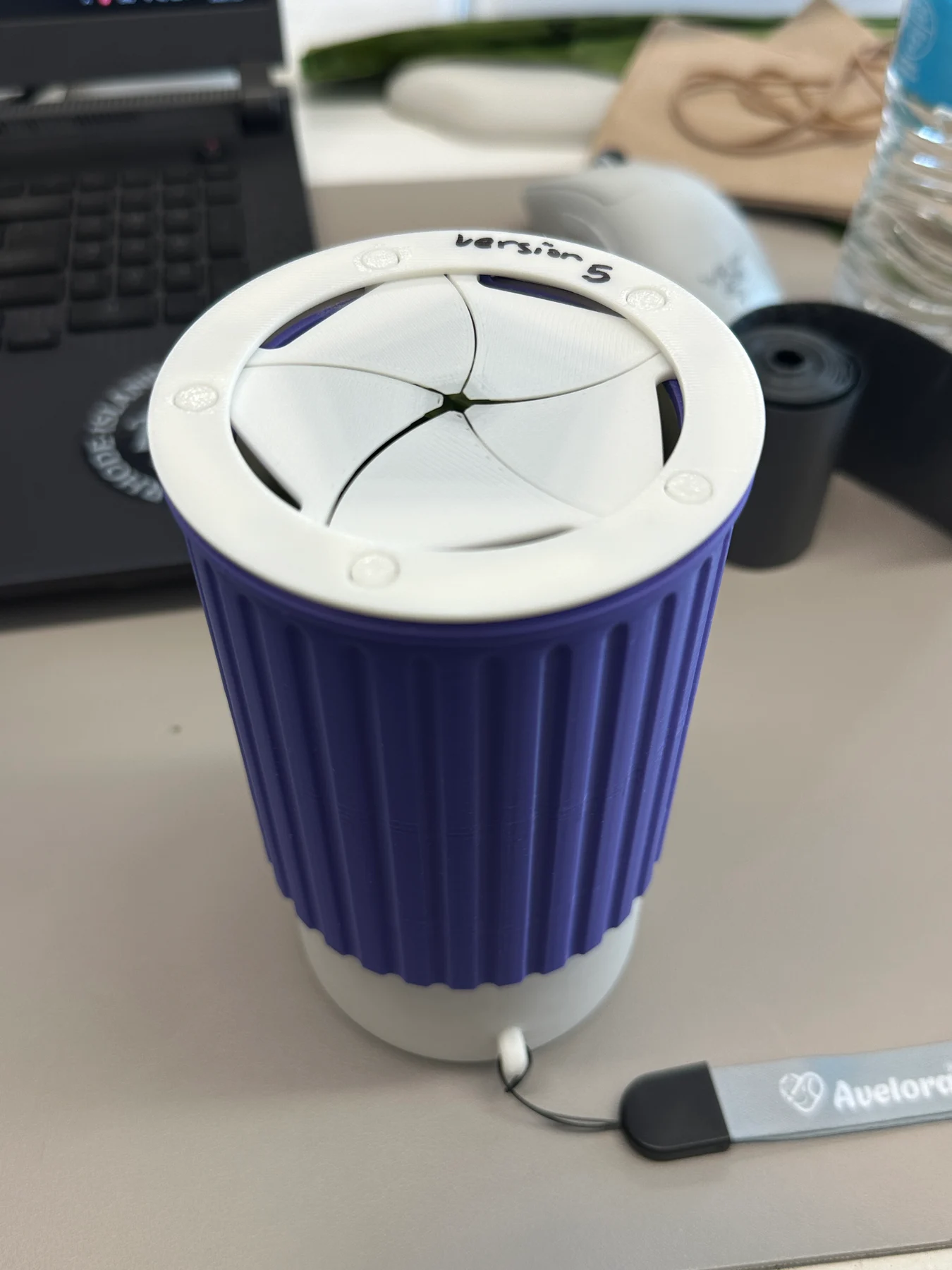
A carry-oriented concept made tangible through repeated prototyping.
The prototype demonstrates manual iris actuation, access to the bag compartment, bag handling, and pickup with a substitute object. The intended pull-and-tear bag workflow keeps the next bag available without opening the base each time; replenishing the roll still requires access.
Real-waste and outdoor trials, cleaning, durability, and usability with dog owners remain to be tested. The project has not been commercialized or validated for production.